.png "Travelsaathi")
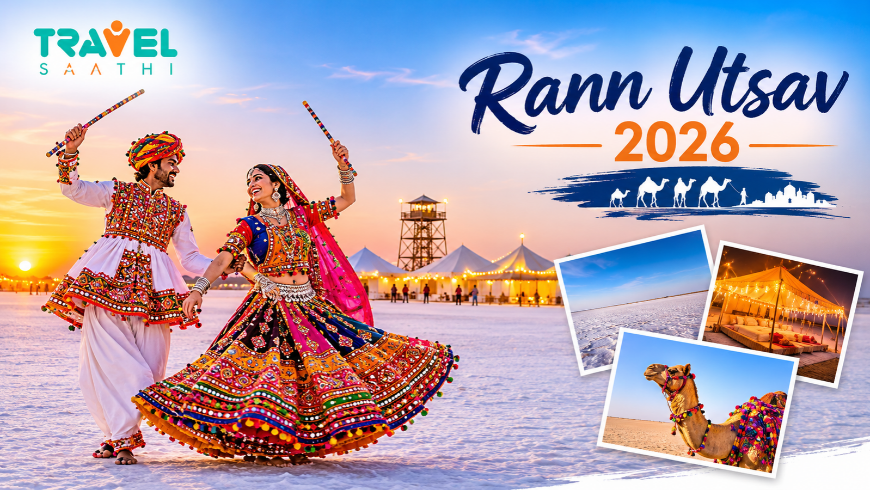
Imagine standing on a plain of pure white salt that stretches to the horizon, with nothing above you but a huge sky that changes from gold to pink to deep blue. That is the White Rann of Kutch, and it is the heart of Rann Utsav, one of Gujarat's most loved winter festivals. Every year, travellers from across India and abroad come to Dhordo to walk on the salt flats, listen to folk music, shop for handmade crafts and sleep in a tent village at the edge of the desert.
This guide to Rann Utsav 2026-27 covers the dates, the best time to go, what to do, nearby places worth adding, how to reach and how to travel responsibly. It is written for first-time visitors who want a clear plan before they book.
What is Rann Utsav?
Rann Utsav is a seasonal cultural festival held in Dhordo, a village in the Kutch district of Gujarat, close to the Great Rann. It brings together the landscape, the music, the food and the handicrafts of the region in one place. Visitors stay in a tented village, enjoy evening performances and spend their days exploring the desert and the surrounding villages.
What makes it special is the setting. For much of the year the Rann is a different place, but in the dry season the salt crust is firm and bright, and the whole area becomes a destination for sightseeing, photography and quiet reflection.
Rann Utsav 2026-27 dates
The 2026-27 season runs from 1 November 2026 to 7 March 2027. That gives you a long window to choose from, so you can match your trip to the weather, your holidays and the moon calendar. The busiest weeks are usually around Diwali, Christmas and New Year, so if you plan to travel in those periods, book your stay and transport early.
The organisers have announced upgraded stays and new visitor experiences for this season, including new semi-permanent tents at Dhordo and Dholavira, and itineraries that link Dhordo with Dholavira, Mandvi and other parts of Kutch. Programmes can change, so confirm the latest details before you finalise your plan.
Best time to visit the White Rann
The weather is cool and dry throughout the festival, but the experience changes with the moon.
-
Full-moon nights: Moonlight lights up the salt flats and gives the desert a soft, silver glow. Popular full-moon windows this season are 23-25 November, 22-24 December, 21-23 January and 19-21 February.
-
Dark-moon nights: These suit stargazing, because the sky is clearer. Look at dates around 9 November, 8 December, 7 January and 6 February.
-
Sunrise and sunset: On any date, these are the best hours for walking on the Rann, taking photographs and enjoying the colours.
-
Fewer crowds: Weekdays and the weeks outside the main holiday periods feel calmer.
Nights are cold even after a sunny day, so plan for warm layers whichever date you choose.
Things to do at Rann Utsav
Walk on the White Rann. This is the main attraction. Head out at sunrise or sunset when the light is softest, and take time to simply stand and look.
Enjoy folk music and dance. Evenings at the festival feature performances by local artists, including traditional Kutchi instruments and the lively Siddi community performances. Even if you do not know the songs, the rhythm is easy to enjoy.
Taste Kutchi food. Local meals are simple, hearty and full of flavour, and eating them near the desert makes them even more memorable.
Browse the Haat. The festival market is a good place to find Ajrakh prints, embroidery, Bandhani and other handmade crafts. Buying directly from artisans supports the families who keep these traditions alive.
Try the new experiences. The season includes craft workshops, live music, storytelling and exhibitions. Check the programme during your stay to see what is on.
Places to add near Dhordo
Most visitors stay two nights, but the region rewards a longer visit. If you can spare more time, consider these stops.
-
Kala Dungar: The highest point in Kutch, with wide views over the Rann stretching into the distance.
-
Ajrakhpur and craft villages: Watch artisans at work and learn how block-printed textiles are made.
-
Bhuj: A historic town with markets, museums and palaces, and the main gateway to the region.
-
Mandvi: A coastal town known for its beaches and traditional shipbuilding heritage.
-
Dholavira: A UNESCO World Heritage Site with the remains of a Harappan city, ideal for history lovers.
Where to stay
The classic choice is the Tent City at Dhordo, where you sleep in a tented village beside the desert and walk to the festival grounds. This season, the organisers are adding premium semi-permanent tents, so you may see more variety in comfort levels. Resorts and hotels in nearby towns are another option, especially for families and travellers who prefer a more traditional room. Whichever you choose, book early for Diwali, Christmas and New Year.
How to reach Dhordo
Bhuj is the main gateway. It has an airport and a railway station and is connected by road to major cities in Gujarat. From Bhuj, Dhordo is about three hours by road. Many tour packages include transfers from the Bhuj airport or railway station, which is a convenient option if you are visiting for the first time or travelling with family.
If you are driving, plan your route in daylight, keep extra time for stops, and check the road and weather conditions before you leave.
Permit and entry rules
Visitors need an entry permit to go to the Rann area near Dhordo. Rules and timings can change, so check the latest requirements before you travel, or ask your tour operator to arrange the permit as part of your booking. Carry a valid photo ID, because it is usually required.
A simple three-day plan
-
Day 1: Reach Bhuj, take a short walk through the old town and begin the drive to Dhordo. Check in to your tent and enjoy the evening performances.
-
Day 2: Watch the sunrise on the White Rann, spend the day at the festival grounds and the Haat, then return to the salt flats for sunset or moonlight.
-
Day 3: Visit Kala Dungar and a craft village on the way back to Bhuj, then continue your onward journey.
If you have extra days, add Dholavira, Mandvi or more time in the craft villages.
What to pack
-
Warm layers, a jacket, a scarf and a woollen cap for cold nights
-
Comfortable walking shoes for the salt flats
-
Sunscreen, sunglasses and a hat for bright daytime sun
-
Lip balm and moisturiser, as the air is dry
-
A power bank and a camera or phone with enough storage
-
Your photo ID and permit documents
Travel responsibly
The White Rann is a fragile landscape, not just an empty stretch of salt. Stay on marked routes, carry your waste out with you and avoid disturbing wildlife or restricted areas. Ask before photographing local people or their work, and buy crafts directly from artisans where you can. Small choices like these help keep the destination beautiful for the next visitor.
Plan your Kutch trip with Travel Saathi
Rann Utsav fits well into a larger Gujarat and Rajasthan holiday, and travelling with an operator makes the logistics easier. Travel Saathi can help with flights, stays, transfers, group bookings and travel insurance through its services, and its team can shape an itinerary around your dates and the moon calendar. If you enjoy desert landscapes, you may also like the Rajasthan tour packages, and travelling with children or elders is easier with the tips in our guide to family tour packages in India.
For more ideas across the country, browse the full range of India tour packages or read our guide to the best India tour packages for 2026. When you are ready to plan, contact the Travel Saathi team and share your dates, group size and interests.
Rann Utsav is not a trip you forget. The silence of the salt flats, the music in the evening and the colours of the crafts stay with you long after you return. Start planning early, pick the moon dates that suit you, and leave enough time to enjoy the White Rann at its own slow pace.


.webp)